
The indie game scene has transformed what we expect from environmental design. While AAA studios pour millions into photorealistic textures, indie developers are pushing the boundaries of artistic expression through ingeniously crafted backgrounds that don’t just frame the action – they fundamentally enhance the player experience.

Hollow Knight
Hollow Knight‘s Hallownest stands as a masterclass in atmospheric world-building. Team Cherry didn’t just create beautiful parallax backgrounds; they used them to tell stories. The looming architecture in the City of Tears creates a sense of decay and lost grandeur, while the layered depths of Deepnest use overlapping background elements to generate genuine claustrophobia. It’s environmental storytelling at its finest, where every crumbling statue and distant spire adds to the narrative.

Hyper Light Drifter
For a different take on environmental design let’s talk about Hyper Light Drifter‘s approach. Heart Machine crafted backgrounds that pulse with otherworldly energy, using pixel art that somehow feels both retro and impossibly modern. The ruins scattered throughout the game aren’t just static images – they’re mysteries waiting to be decoded. The way the background elements shift between warm and cool color palettes as you traverse different regions isn’t just aesthetically pleasing; it’s crucial to the game’s emotional journey.

Inside
Inside offers a different take entirely. Playdead‘s approach to background design is an exercise in minimalist horror. The game’s distant industrial landscapes and muted color schemes create a sense of oppressive scale that makes the player feel insignificant. It’s proof that sometimes what you don’t show is more powerful than what you do. The subtle parallax scrolling adds depth without drawing attention to itself – exactly what the dystopian narrative demands.

Gone Home
Gone Home‘s Arbor Hill mansion deserves far more credit than it gets. The Fullbright Company turned every wallpaper pattern and family photo into a narrative device. The genius lies in how the backgrounds shift from mundane to menacing as your investigation deepens – not through any supernatural elements, but purely through context and environmental storytelling.

Gris
Gris takes background design in a completely different direction. Nomada Studio created watercolor-inspired landscapes that transform alongside the protagonist’s emotional journey. The way color bleeds back into the world isn’t just gorgeous – it’s fundamental to the game’s exploration of grief and recovery. Each new shade unlocked feels like a victory, with backgrounds that quite literally bloom to life.

Thomas Was Alone
The minimalist approach of Thomas Was Alone might seem simplistic at first glance, but Mike Bithell’s use of negative space and geometric backgrounds creates a sense of scale that transforms simple rectangles into epic heroes. The stark contrast between the characters and their surroundings makes every platform feel like part of a larger, mysterious world.

Papers, Please
Papers, Please might not be the first game that comes to mind when discussing background design, but Lucas Pope’s depiction of Arstotzka’s border checkpoint is a masterwork of environmental psychology. The drab, Soviet-inspired architecture looming in the background isn’t just decoration – it’s a constant reminder of the authoritarian state bearing down on both the player and the desperate immigrants seeking entry.

Animal Well
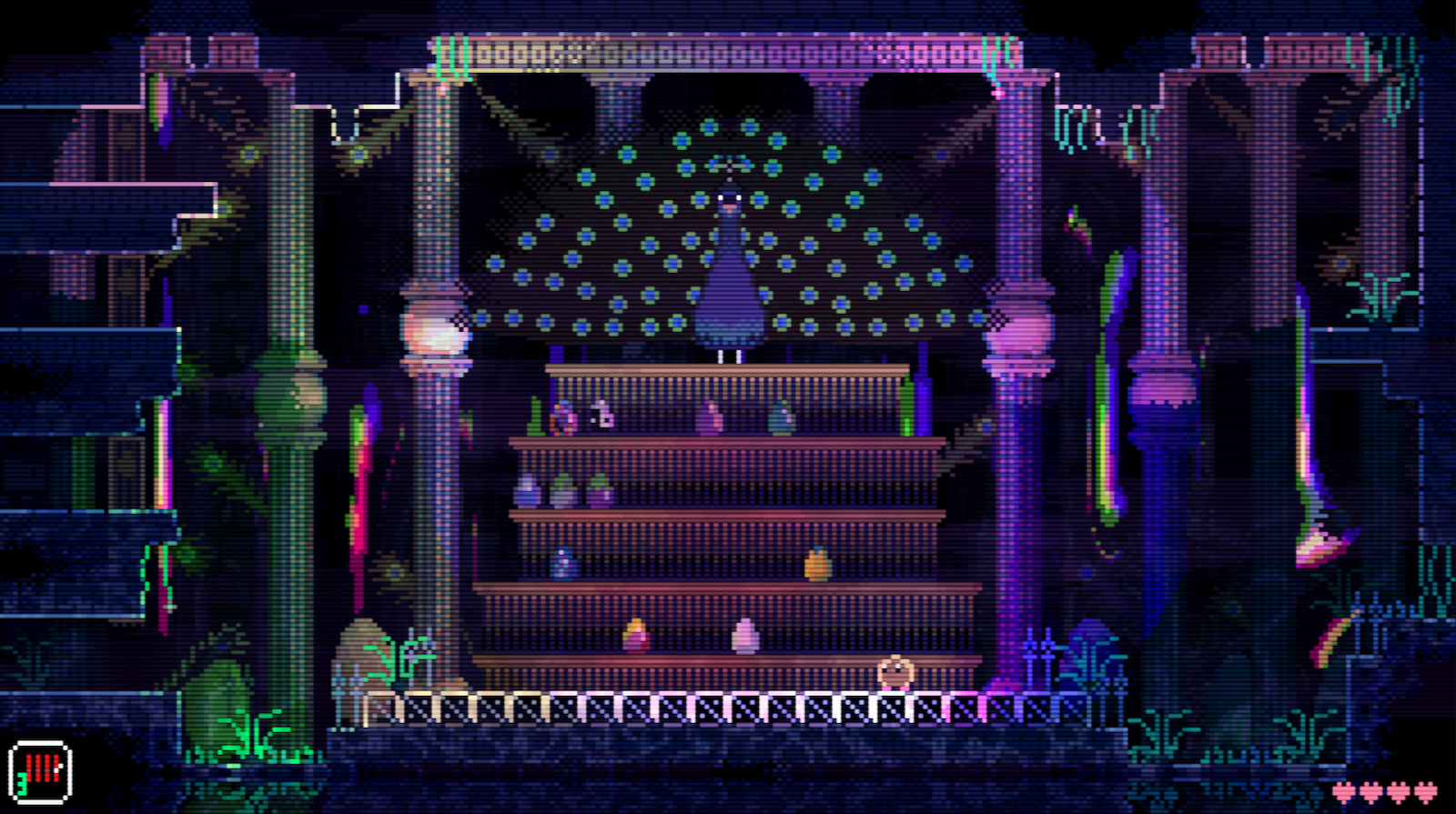
Animal Well‘s approach to environmental design rewrote the rules of metroidvania exploration by treating its backgrounds as both puzzle elements and psychological tools. Developer Billy Basso created an intricate pixel-art world where seemingly decorative elements could suddenly become crucial gameplay mechanics – a shadow in the background might be a hint, a threat, or a puzzle solution, forcing players to question everything they see.
The game’s use of dynamic lighting isn’t just for show; it fundamentally changes how players interact with and interpret their surroundings, while the haunting background designs blur the line between beautiful and unsettling. This ambiguity extends to the game’s item system, where objects that initially appear purely atmospheric might actually be key tools, creating an environment where players must constantly reassess their assumptions about what’s interactive and what’s merely decorative. The result is a world that feels alive and mysterious, where the background isn’t just a stage for the action but an active participant in both the gameplay and storytelling.
Indie Games Reinvent Storytelling
The truth is, indie developers have figured out something crucial – backgrounds aren’t just wallpaper. They’re storytelling tools, mood setters, and sometimes even crucial gameplay elements. While bigger studios often treat backgrounds as spaces to fill with detail, indie games are proving that thoughtful restraint and artistic vision can create more memorable environments than any amount of high-resolution textures.
This isn’t about hardware limitations or budget constraints – it’s about creative freedom and artistic courage. These indie developers aren’t just making do with less; they’re showing us how much more can be done when you prioritize vision over visual fidelity.

Leave a Reply